
Brown patches and uneven tone: where they really come from
Sun, inflammation, hormones — three different origins, three different courses of action.
· Hajar Atila, registered nurse
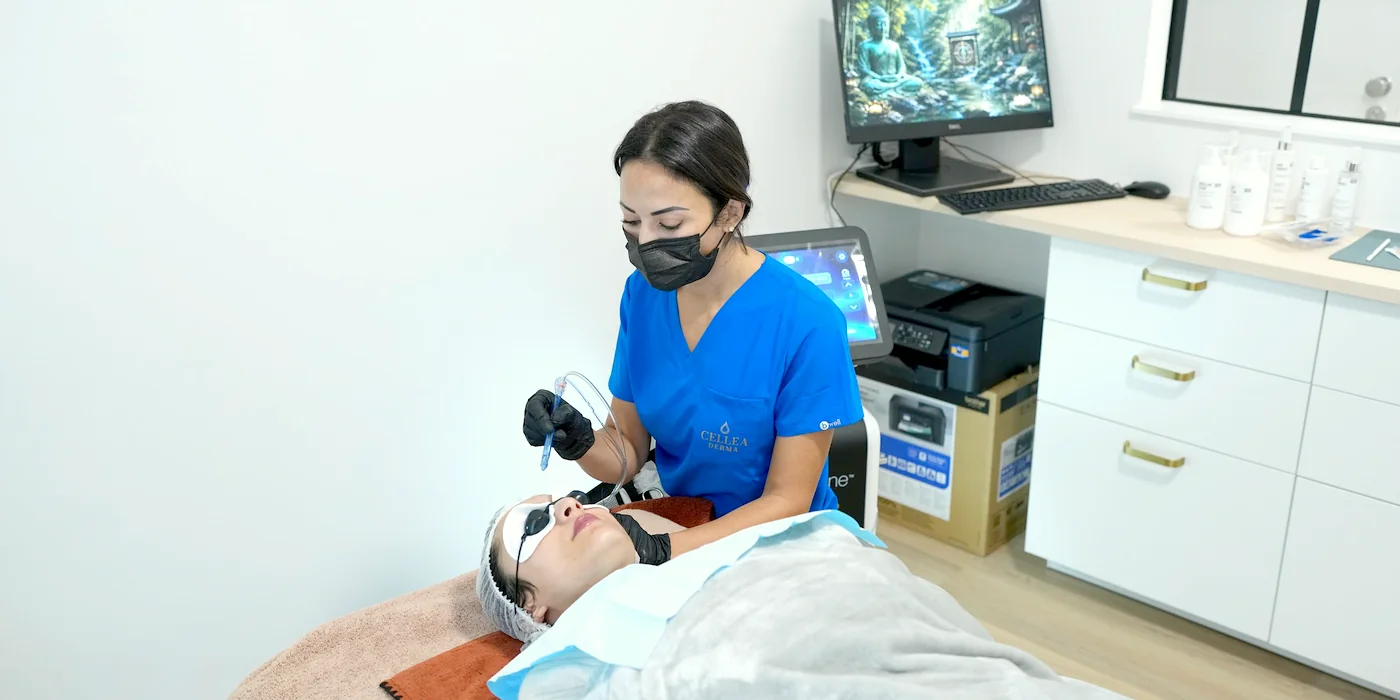
People talk about “patches” as if they were one single thing. In practice we see three, and confusing them loses months.
Sun spots
These are the most common: clear-edged patches, fairly round, on exposed areas — cheekbones, the backs of the hands, the décolleté. They come from exposure accumulated over years. They respond well to treatments that speed up renewal, provided the area is protected afterwards.
The marks left by inflammation
After a spot, an irritation, an ingrown hair, the skin often leaves a brown or pink mark: this ispost-inflammatory hyperpigmentation. It is a deposit of pigment, with no loss of tissue, and it goes on its own, slowly: from three to eighteen months depending on the depth and the phototype.
Darker skins mark more and for longer. Their melanin is more reactive. It calls for gradual protocols, because here gentleness gives the best result.
Melasma
Blurrier patches, often symmetrical, on the forehead, the cheekbones and the upper lip. It is linked to hormones — pregnancy, contraception — and made worse by the sun and by heat. It is the most difficult of the three: it improves, it comes back, it calls for regular maintenance rather than a short course. Promising to make it disappear would be dishonest.
What changes everything, and comes down to one habit
A high sunscreen, every day, including in winter and behind glass. It is what turns off the tap: any depigmenting protocol then works at full strength. It is the measure with the most effect on the final result, and the only one that is entirely yours.
What can be done at the practice
A gentle peel or an infusion of brightening actives smooths the texture and fades them gradually. We work in spaced series, assess each time, and stop if the skin reacts. On an isolated sun spot the result is often clear; on melasma, the aim is to keep it in check.
When to see a doctor
Any patch that changes shape, colour or size, that bleeds, that itches or whose edges become irregular must be shown to a doctor without delay. A new patch in an adult also deserves an opinion. This is a medical matter.
Something here that applies to you? The first appointment lasts twenty minutes and is there to look, not to sell.
Book an appointment See all 30 treatmentsAlso worth reading
Cellea assistant
The questions we are asked most often.
How much does it cost?
All prices are on the treatments page, from €55 to €175 depending on the treatment and its length. The number of sessions is decided during the history-taking, and you are given the priced protocol in writing at the end of the first appointment.
Does it hurt?
The DermoOne™ works without a needle: a jet of compressed air drives the serums in. Microneedling does use sterile micro-needles, with cool air for comfort. Both are explained to you beforehand.
What happens at the first appointment?
Twenty minutes of intake, and a written protocol at the end. Bring the list of your current treatments, creams and supplements included: it is what guides the choice of active ingredients.
How is the session paid for?
You request your slot online, the practice confirms it by email, and payment is made at the practice on the day of the session. To move an appointment, let us knowat least 24 hours in advance: the slot goes to someone else.