
Acne scars: hollows, patches, raised scars — three lesions, three answers
Three different lesions under one word, and three different outlooks.
· Hajar Atila, registered nurse
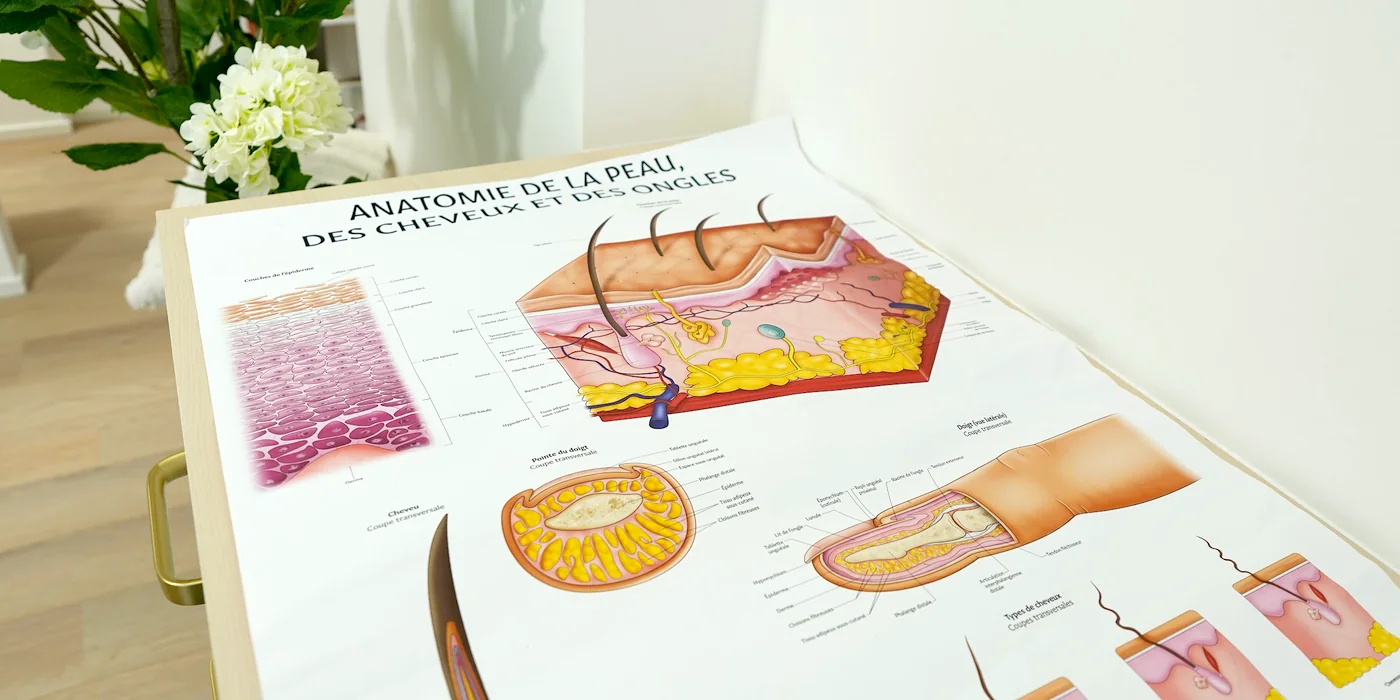
Everything acne leaves behind gets called “scars”. In reality there are three things, with three causes and above all three outlooks. Knowing which one you have changes everything.
1. Coloured marks, which are pigment deposits
Red, brown or purplish, flat to the touch. This is residual inflammation or post-inflammatory pigmentation.The tissue is intact: they go on their own — in three to eighteen months. We can speed them up, and that is all they ask for.
The test is simple: run your finger over it. If it is smooth, it is a mark.
2. Hollows
Here, collagen has been lost. We distinguish hollows with sharp edges, soft wide depressions, and fine deep pits. The first two respond to microneedling and to work on collagen; the third, very narrow, resist far more and are often a matter for a medical procedure.
3. Raised scars
Scars that stand out, firm, sometimes red or itchy. Hypertrophic if they stay within the limits of the original lesion, keloid if they spread beyond it.They are a matter for the dermatologist, and the right procedure comes from them.
The order of things
A rule that avoids a lot of disappointment:scars are treated once the acne has calmed down. Every new spot makes more of them. First you calm, then you repair — even if that is frustrating.
And in the meantime, sun protection is the most profitable treatment there is: it stops coloured marks settling in.
What can honestly be stated
On moderate hollows, a series of microneedling visibly improves the contour — the contour gains, and the skin keeps its memory. A promise of complete disappearance deserves a second opinion.
When to see a doctor
Acne that is still inflammatory, nodules, or raised scars call for a dermatologist's opinion before anything else. It is also the dermatologist who decides whether a long-term treatment is needed — and treating the cause costs less than repairing the consequences for years.
Something here that applies to you? The first appointment lasts twenty minutes and is there to look, not to sell.
Book an appointment See all 30 treatments